For dojos, clubs and associations
Book a karate seminar for your dojo
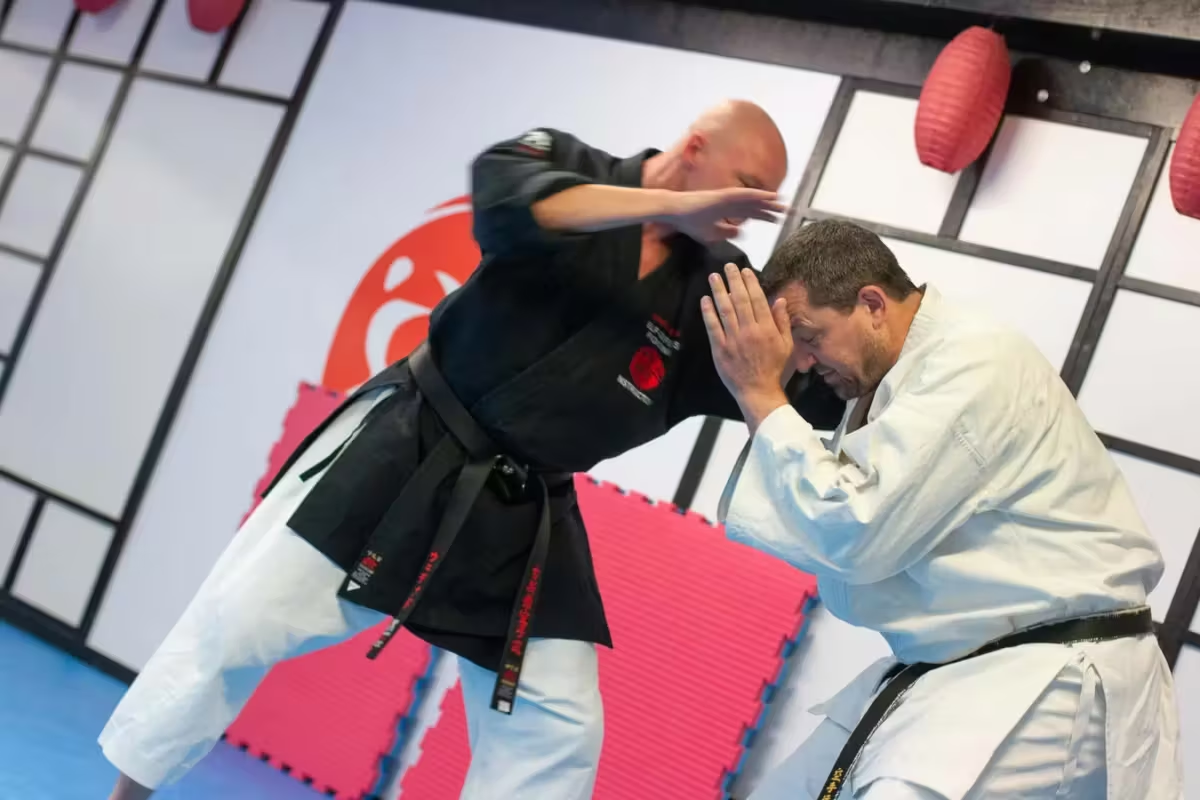
Bring Christian Wedewardt to your dojo, for karateka of all styles. We bring practical, applicable karate to you: application-oriented bunkai (the analysis of kata techniques and how they are used), self-defense that works, and a clear training concept that noticeably moves your karateka forward.
5.0 stars from 374 Google reviews
Christian Wedewardt
7th Dan, open to all styles
From form to function
At the center is a question many karateka ask: what do the movements of the kata actually mean, and how do I use them under pressure?
- 01
Bunkai and kata application
A uke from the Heian series suddenly becomes recognizable as the start of a lever or a throw. We work out, at the level of principles, how kata sequences can be applied coherently and realistically: understandable rather than memorized.
- 02
Self-defense
From first contact through distance and timing to escalation or de-escalation. Functional concepts that hold up outside the dojo, not rehearsed show kumite.
- 03
Open to all styles
Whether Shotokan, Goju, Wado or another style: the principles work across styles. No secret techniques, but sound principles you can develop further yourself.
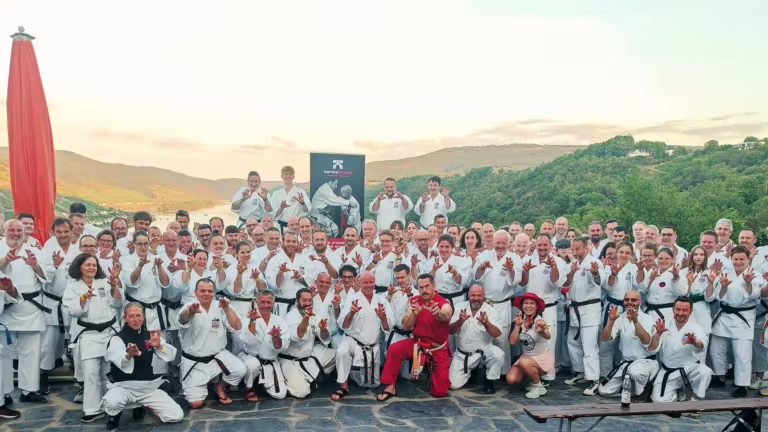
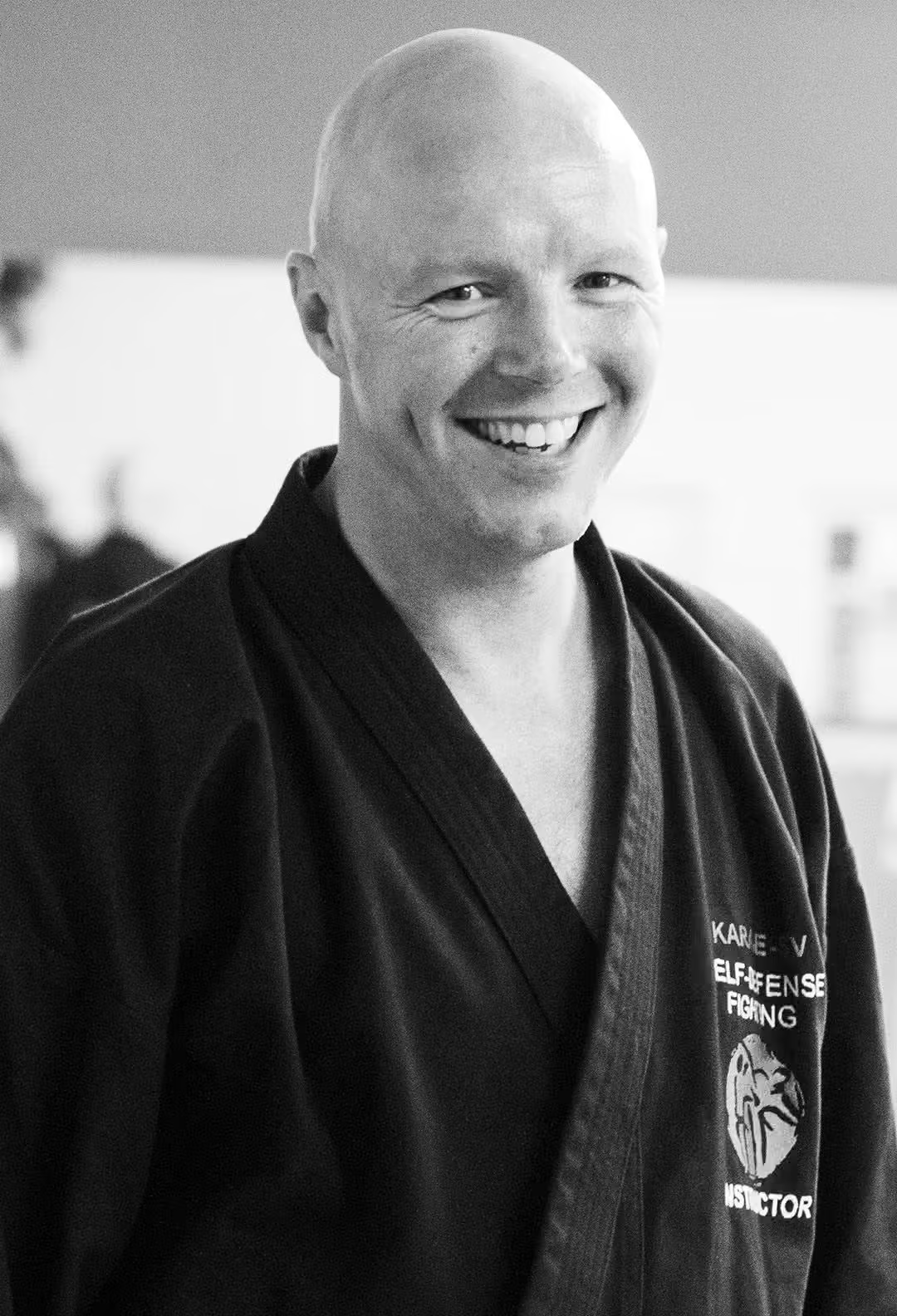
Christian Wedewardt, 7th Dan, with a network of instructors reaching beyond Germany.
Four topics that have proven their worth
Choose what fits your group. Each topic can be booked as its own seminar focus.
01 · Kata
Bunkai
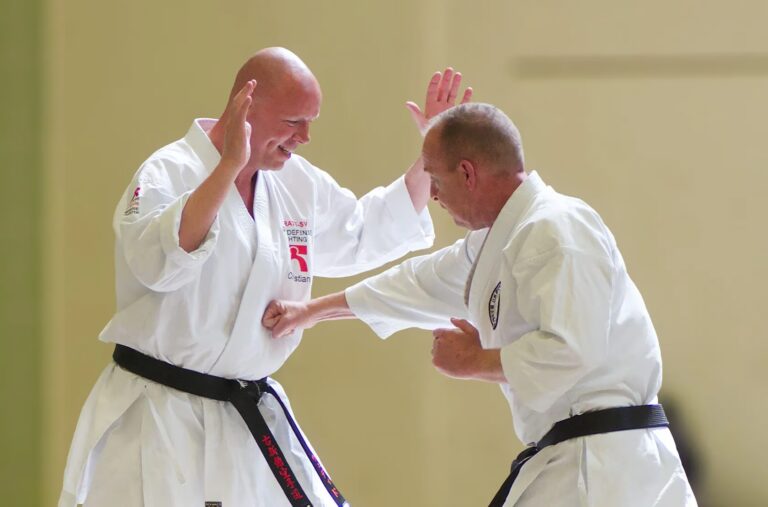
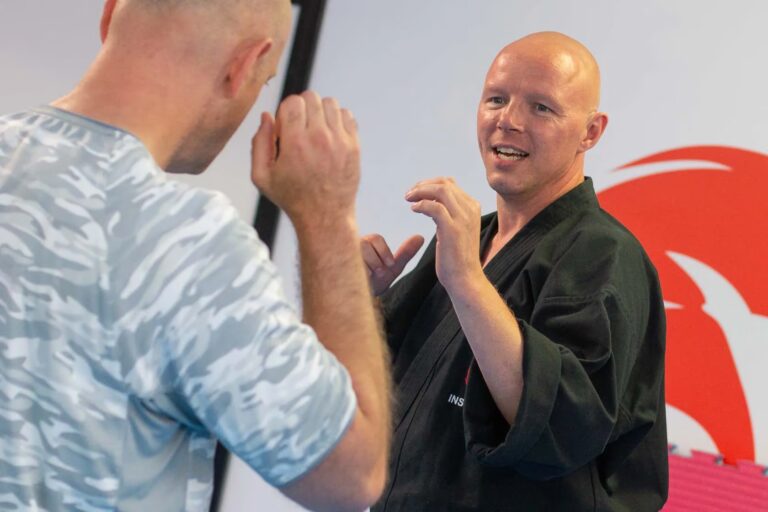
How the movements of the kata really work. Application instead of rote learning.
02 · Self-defense
Self-defense
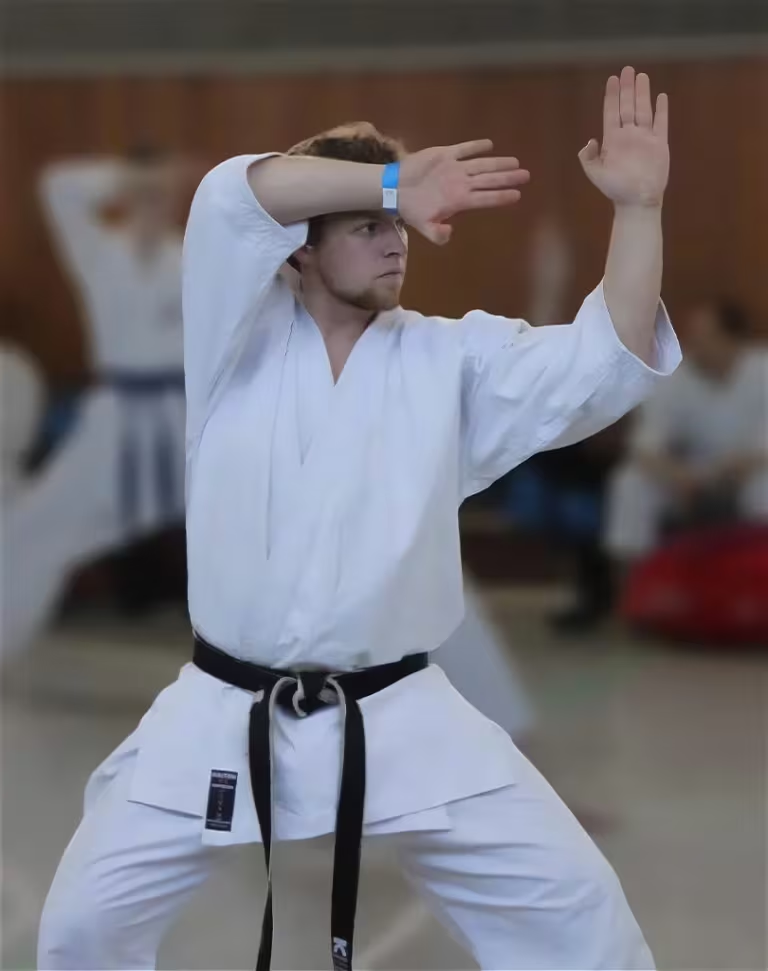
Realistic situations, clear principles: karate that holds up when it counts.
03 · Children
Children's training
Karate for the youngest members of your club. We agree content and scope with you.
04 · Women
Women's self-defense
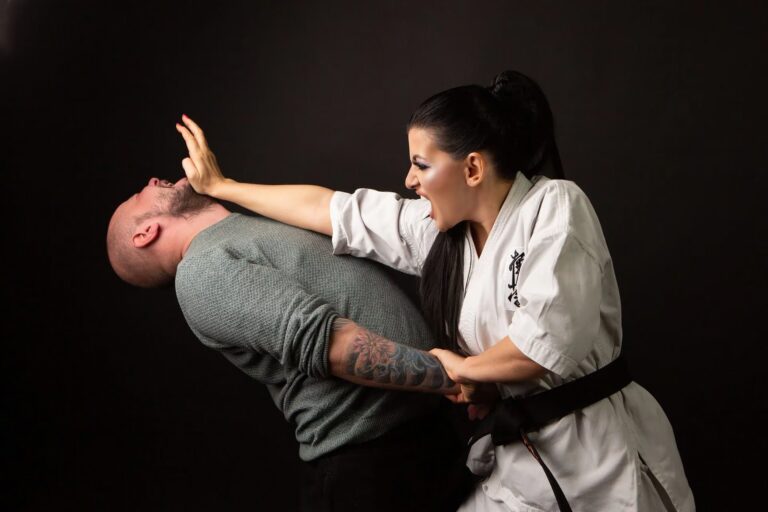
A dedicated focus on women's self-defense, tailored individually with you.
How a seminar works
We agree every seminar with you beforehand so that content and level suit your group.
- 01
Initial conversation
You tell us the focus, grades and group size. We adapt the content accordingly.
- 02
Warm-up and kihon link
A short introduction that links basic techniques to the seminar topic.
- 03
Principles block
We show the underlying concepts step by step, with room for questions.
- 04
Partner work
Application in practice, from controlled drills to freer, kumite-like practice.
- 05
Transfer
At the end, you see how to carry what you learned into your regular training.
Scope
How many hours does a seminar take?
Planning is up to you as the host: you set scope and times. This framework has proven itself for a weekend:
- Saturdayabout 6 hours of training, usually between 9:00 am and 6:00 pm including breaks
- Sundayabout 4 hours, usually from 10:00 am to about 2:00 pm
A compact one-day workshop is just as possible as a multi-day format. A special variant is the Castle Retreat: intensive training in an extraordinary atmosphere.
To the Castle RetreatWho it is for, and why Karatepraxis
A small dojo gets fresh energy for its training routine from a seminar. A club strengthens its group across grades, from white to black belt around the same principle. An association passes the content on widely through seminars and instructor training.
Beginners benefit from clear principles instead of a loose list of techniques, advanced students and instructors from the depth of application. Behind it is Christian Wedewardt, 7th Dan, with a concept of kata, bunkai and self-defense tested over many years.
Our aim
Apply it in your own training the following Monday.
Your group should actually be able to use what they learned, instead of just having seen an impressive demo.
Bunkai videos often look convincing. The difference happens in the dojo: with real partner resistance, direct correction, and questions that can never be asked in a video. What looks plausible on a screen has to prove itself under real pressure first.
Voices of participants
Top notch seminar delivered in Norway. Christian is the real deal. Highly recommended.
After over 50 years of karate, I’m finally meeting someone who teaches karate the way the old masters originally developed it.
“A top-notch trainer, with the perfect blend of respectful interaction, humor, and serious, practical karate self-defense.”
“Excellent course, practical and applicable. It was fun, I’d do it again anytime.”
“Unbelievable location, fantastic organization, wonderful atmosphere and great company.”
Clubs and associations rate Karatepraxis on Google: a more realistic picture than any self-promotion.
5.0 from 374 reviews
Terms at a glance
No mileage charges, no minimum grade. The concrete offer follows after the initial conversation.
Costs
You receive a concrete offer after the initial conversation, once scope, date and number of participants are settled.
- Billing either by the number of hours or as a flat rate for the whole seminar
- Travel is included, no mileage charges on top
- Accommodation is billed separately, if it is needed
- The hosting club provides the hall
Requirements
- Grade: no minimum grade. Depending on the seminar concept, beginners train along too; you set the criteria as the host.
- Children and teenagers: welcome, together with the adults or as a separate session.
- Group size: from 20 participants, no upper limit. From about 50, a few helpers from your own ranks make a noticeable difference.
Lead time
We currently plan with a lead time of 12 to 18 months. If you have a particular date in mind, ask sooner rather than later. Short-notice dates can only be arranged in exceptional cases.
Sample training concepts
Three focus areas that have worked particularly well in seminars, as a starting point for your own concept.
Heian bunkai system
The complete Heian kata series read as a system: a continuous bunkai concept from the first grade to the last.
Children's training
Age-appropriate principles instead of simplified forms. Karate that grows with the children.
Self-defense
Realistic scenarios, clear options for action, from the first reaction to de-escalation.
Frequently asked questions about booking
You can find more answers about Karatepraxis in the frequently asked questions (in German).
01How far in advance should I book?
We currently plan with a lead time of about 12 to 18 months. If you have a fixed date in mind, it is best to ask early. Short-notice dates can only be arranged in exceptional cases.
02What does a seminar cost?
There is deliberately no fixed price. After the initial conversation, once scope, date and number of participants are settled, you receive a concrete offer, billed either by the number of hours or as a flat rate for the whole seminar. Travel is always included.
03Do participants need a particular grade?
No. There is no minimum grade; depending on the seminar concept, beginners train along too. You set the exact participation criteria as the host.
04Can children and teenagers take part too?
Yes, they are welcome: together with the adults or as a separate session, whichever suits your group.
05What if I do not have an exact date yet?
No problem. Ask anyway, without obligation, and give a rough period, such as a quarter or a season. We will then agree the exact date together with you.
06Do you need a particular hall or equipment?
An ordinary dojo or sports hall with enough space for your group size is perfectly sufficient. Mats are not needed for most content. If your preferred topic includes ground techniques, we will discuss that in the initial conversation.
07How many instructors come, and in which language is the seminar taught?
As a rule, Christian Wedewardt, 7th Dan, teaches the seminar alone. For larger formats such as the Castle Retreat, an international network of instructors joins him. Teaching is in German, and in English as well where international instructors are involved.
Request your karate seminar now
A few key details are enough to start; we clarify the rest in a personal conversation.
The more specific your details, the better our proposal fits. You can find current public seminars under Dates, and many answers in the frequently asked questions.
7 questions, 4 of them optional. No obligation. Fields marked * are required.
After you send it
What happens next
- 01
We review your request
We read your details carefully and get back to you within a few days.
- 02
A short call
We clarify details such as date, number of participants and focus directly by phone.
- 03
A suitable offer
You receive a concrete proposal. Seminars are usually planned with 12 to 18 months of lead time.